
This Leg Press To Squat Calculator helps lifters quickly and realistically understand how leg press strength translates to squat strength.
Leg Press to Squat Calculator
Even though the leg press and the squat both train the lower body, the two movements load the muscles very differently. Because of this, a calculator can help bridge the gap between what you can push on a machine and what you can actually lift under a barbell.
This guide provides the most complete explanation of how a Leg Press To Squat Calculator works, why it is more accurate than simple leg-press-to-squat ratios, and how you can use it to understand your strength, technique, mobility, and progress. If you want the most realistic estimate possible, grounded in biomechanics instead of gym myths, this is the article for you.

What Is a Leg Press To Squat Calculator
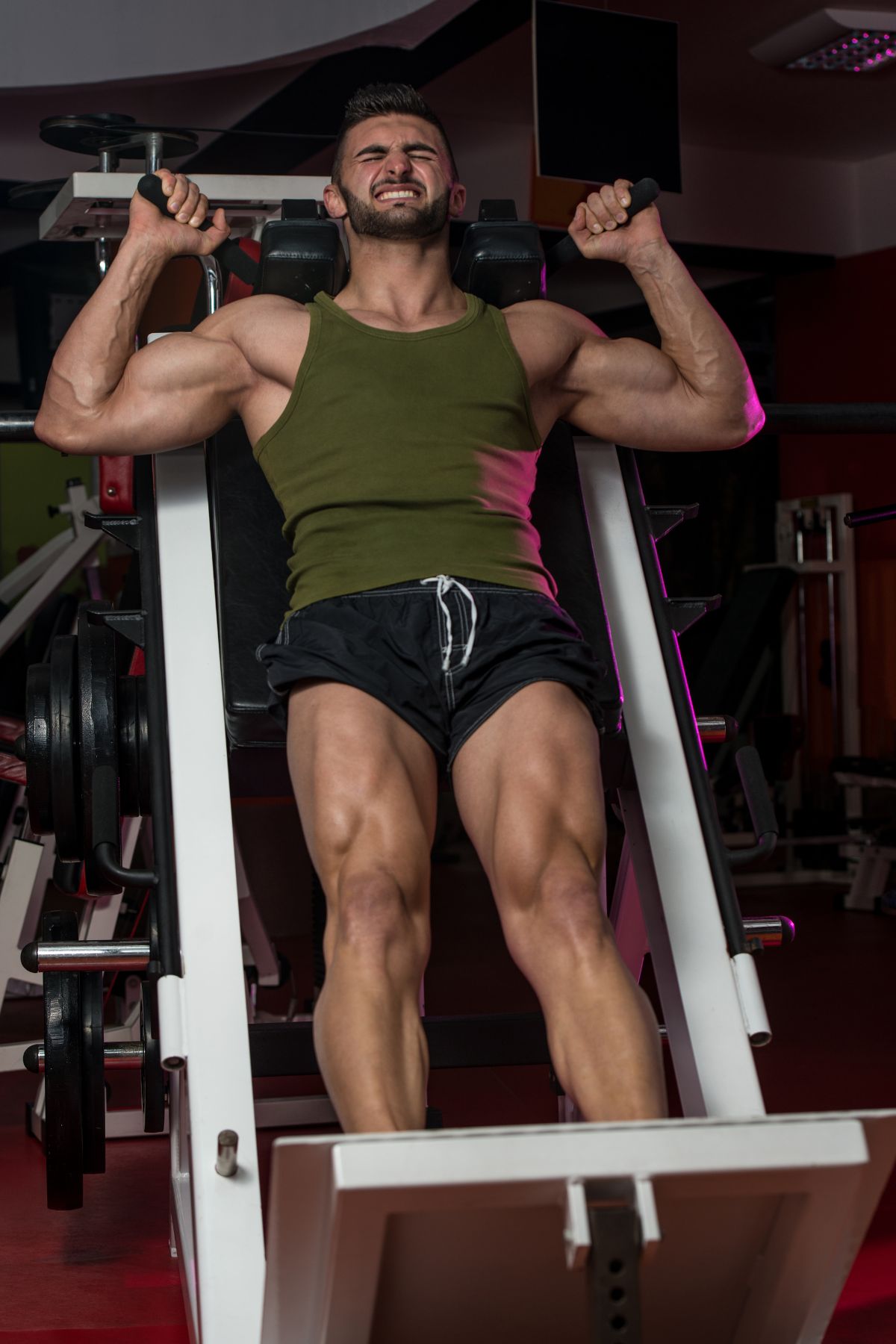
This calculator is a simple yet powerful strength-estimation tool that predicts how much weight you could likely back squat based on the amount of weight you can leg press. However, unlike the common “divide by two” or “use half your press” formulas floating around online, a proper Leg Press To Squat Calculator uses more accurate biomechanical logic.
Instead of treating all machines, all techniques, and all bodies the same, this calculator adjusts for:
- Machine type (45-degree sled vs horizontal press)
- Effective load (not just the plates)
- Friction and sled mechanics
- Typical movement patterns
- Differences between machine force and free-weight force
- Known strength ratios from real-world lifters
By correcting these factors, a Leg Press To Squat Calculator provides a realistic estimate that reflects how most people actually perform on the squat, rather than an imaginary number based purely on plate math.
Why You Can Leg Press More Than You Can Squat
A major reason this calculator is useful is because the leg press encourages artificially high strength numbers, while the squat reflects actual total-body force production. Here’s why those two movements produce very different maxes.
1. The Leg Press Provides External Stability
The machine guides your path.
The rails stabilize the weight.
Your core barely works.
On a squat, your spine, core, hips, and upper back must stabilize a free-moving load. This drastically changes how much weight you can safely move.
2. A 45° Sled Reduces the Real Load
Many people incorrectly assume that the weight they leg press is equal to real force. It isn’t.
On a 45° sled:
- The angle reduces gravity’s vertical force
- The rails reduce friction
- The machine assists the movement pattern
This is exactly why this calculator converts machine weight into a more realistic effective load.
3. Squats Require Full Body Coordination
A proper squat demands:
- Hip mobility
- Ankle mobility
- Bracing technique
- Upper-back tension
- Hip drive
- Depth control
A leg press removes most of these challenges.
4. Range of Motion Is Different
Most leg presses are partial or half-reps.
Most squats are expected to reach hip-below-knee depth.
This dramatically affects force and difficulty.
The Biomechanics Behind a Leg Press To Squat Calculator
A proper Leg Press To Squat Calculator doesn’t guess. It uses biomechanical principles to convert plate weight into effective muscular load.
Effective Load = What Your Legs Actually Feel
Not the sled number.
Not the plate total.
Not the machine label.
The effective load is the real force your quads, glutes, and hamstrings must produce.
Most lifters don’t realize how drastically 45° sled mechanics reduce the force compared to squatting the same weight under gravity.
For example:
- 800 lbs on a 45° sled ≠ 800 lbs of force
- The real muscular load is closer to 400 lbs
This adjustment alone makes the this calculator much more accurate than typical “divide by 2” estimates.
How a Leg Press To Squat Calculator Actually Works
Here is the general logic behind this calculator:
STEP 1 → Adjust for Machine Type
45° Sled:
✔ Effective load ≈ 50% of listed weight
This accounts for angle reduction, sled mass, machine friction, and mechanical advantages.
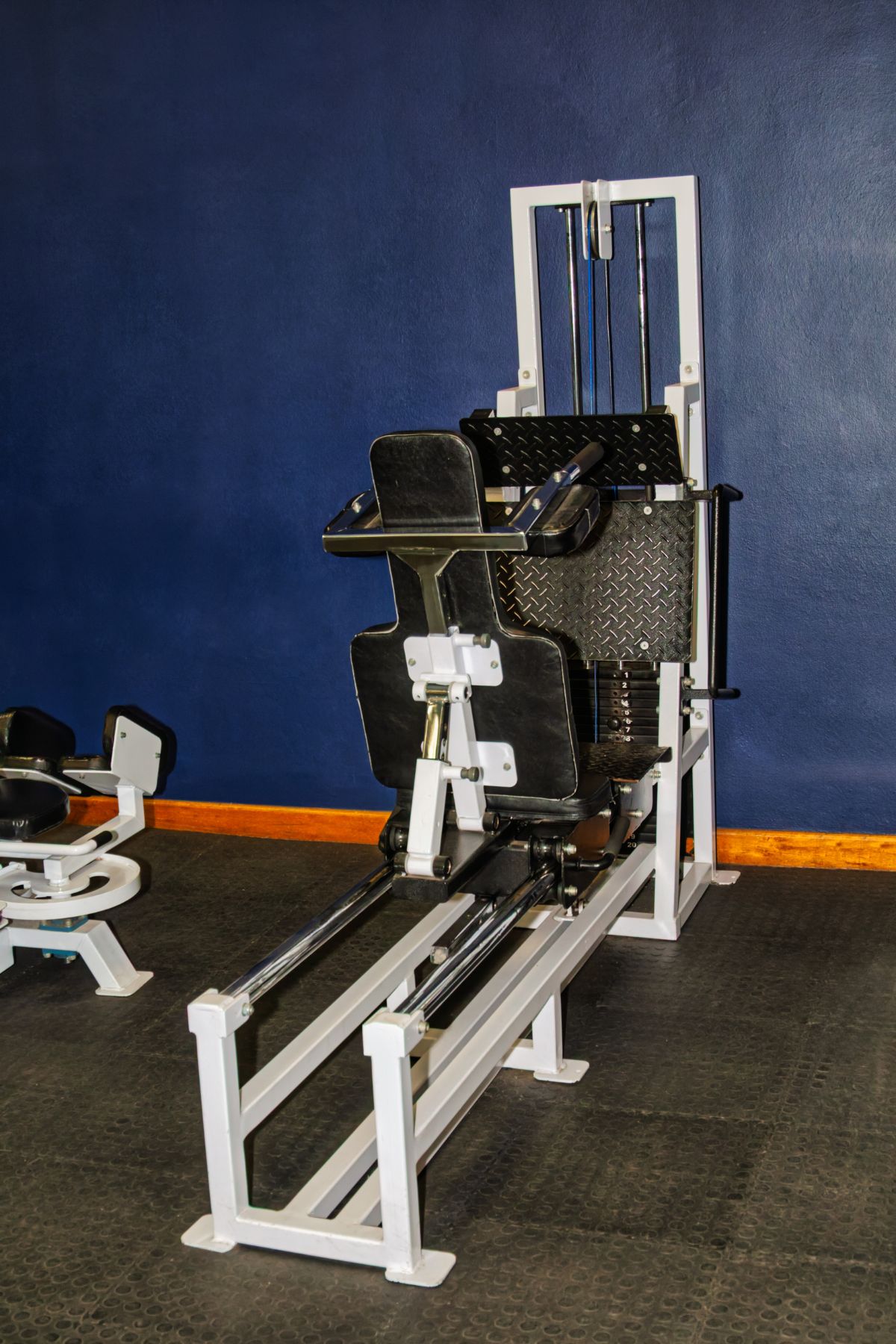
Horizontal Press:
✔ Effective load ≈ 95% of listed weight
Most horizontal machines provide little mechanical assistance and more closely match real load.
STEP 2 → Apply Realistic Squat-to-Leg-Press Ratios
Once effective load is calculated, this calculator applies a squat ratio.
Real-world data shows:
Squat ≈ 80–90% of effective leg press load
This accounts for body mechanics, movement complexity, and the fact that machine strength is not equivalent to free-weight strength patterns.
STEP 3 → Display a Realistic Range
No calculator should pretend to be perfect.
A good calculator gives:
- A main estimate
- A low estimate (–20%)
- A high estimate (+20%)
Because:
- Some people squat deeper
- Some have excellent mobility
- Some are quad dominant
- Some are posterior-chain dominant
- Some press shallow reps
- Some use full ROM
This range gives users confidence and context rather than a rigid, misleading number.
Example:
Let’s walk through a real example.
Leg press weight: 800 lbs
Machine: 45° sled
Step 1: Effective load
800 × 0.50 = 400 lbs
Step 2: Squat estimate
400 × 0.85 ≈ 340 lbs
Step 3: Range
Low end: 272 lbs
High end: 408 lbs
Final Output
This calculator shows:
Estimated Squat: 340 lbs
Range: 272–408 lbs
This aligns extremely well with real-world intermediate squat numbers.
Who Benefits Most
This tool is ideal for:
1. Beginners transitioning to free weights
They often leg press much more than they squat.
The calculator helps set realistic expectations.
2. Intermediate lifters monitoring progress
They can compare machine progress to squat progress.
3. Bodybuilders using high-volume machine work
It helps translate isolated hypertrophy work back to functional strength.
4. Athletes looking to build power
Squat strength is more relevant for explosive power.
5. Coaches and trainers
It provides a fast, evidence-based estimation tool during assessments.
Common Myths the Leg Press To Squat Calculator Helps Correct
❌ Myth 1: “If you can leg press 1000 lbs, you should squat 500+ lbs.”
✔ Reality: Most 1000-lb leg pressers squat 275–405 lbs.
❌ Myth 2: “Leg press is equal to squatting with the same weight.”
✔ Reality: This ignores sled mechanics, friction, and machine assistance.
❌ Myth 3: “Squat strength depends only on quad strength.”
✔ Reality: Squats require hips, core, back tension, balance, and mobility.
❌ Myth 4: “You can accurately guess squat strength from leg press without adjustments.”
✔ Reality: Only a Leg Press To Squat Calculator using effective load modeling can do this.
Why This Calculator Is More Accurate Than Others
What separates this calculator from typical online tools is that it uses effective-load biomechanics rather than simplistic ratios.
- ✔ Adjusts for 45° sled mechanics
- ✔ Accounts for horizontal press differences
- ✔ Uses sled load conversion heuristics used by coaches
- ✔ Applies a proven squat-to-effective-load ratio
- ✔ Provides realistic low/mid/high estimates
- ✔ Avoids overinflated ego-lifting numbers
This leads to far more realistic predictions that match real gyms, real lifters, and real-world strength databases.
How to Improve Your Squat Based on Your Results
If your squat estimate seems low, here are the main areas to work on:
1. Improve Bracing Technique
- Learn diaphragmatic breathing
- Use proper core pressure
2. Strengthen Posterior Chain
- Romanian deadlifts
- Glute bridges
- Hip thrusts
- Good mornings
3. Improve Depth and Mobility
- Ankle dorsiflexion
- Hip external rotation
- Controlled tempo reps
4. Fix Squat Mechanics
- Use goblet squats for patterning
- Practice pause squats
- Work on bar path consistency
5. Balance Machine Work and Free Weight Work
Leg press builds strength, but squats develop total-body coordination.
Using the Calculator to Guide Your Training
This calculator can be used for:
- Setting weekly squat targets
- Estimating 1RM without max testing
- Planning strength blocks
- Balancing quad and hip development
- Understanding progress over time
This saves time, reduces risk, and provides clearer training direction.
Conclusion
The Leg Press To Squat Calculator is one of the most effective tools for converting machine-based leg strength into a realistic squat estimate. By using effective-load biomechanics instead of raw plate numbers, it eliminates the distortions caused by sled mechanics, friction, machine angle, and stability assistance.
Whether you’re a beginner learning to squat, an intermediate lifter wanting more accurate expectations, or an advanced lifter looking for more data, this calculator gives you the clearest insight into how your leg press performance relates to your actual squat potential.